



Introduction
Your Topics Multiple Stories Every brand, blogger, and content team eventually hits the same wall: you’ve covered your core topics, and now the well feels dry. But here’s what most content creators miss — a single topic is never just one story. It’s a universe of angles, formats, audiences, and narratives waiting to be explored. The idea of turning Your Topics Multiple Stories isn’t just a creative trick; it’s a strategic framework that can multiply your content output without multiplying Your Topics Multiple Stories research time.
Think about how major publications operate. A news outlet covering a product launch doesn’t publish one article and move on. They publish the announcement, an expert analysis, a buyer’s guide, a competitor comparison, user reactions, and a follow-up review weeks later. Each piece serves a different reader at a different stage of their journey. This is exactly the kind of thinking that separates brands with stagnant blogs from those with thriving, high-traffic content ecosystems.
This guide walks you through a practical, step-by-step approach to building a smarter content strategy around Your Topics Multiple Stories. Whether you’re a solo creator or managing a content team, you’ll learn how to extract more value from what you already know, reach wider audiences, and create content that compounds over time.
Quick Facts:
| Factor | Details |
|---|---|
| Core Concept | One topic → many content angles and story formats |
| Primary Benefit | Increased content output without additional research burden |
| Best For | Bloggers, brands, content marketers, SEO strategists |
| Key Strategy | Topic clustering, angle mapping, audience segmentation |
| SEO Impact | Stronger topical authority, better internal linking, higher rankings |
| Content Formats | Articles, videos, newsletters, social posts, podcasts, infographics |
| Time to Results | 3–6 months of consistent implementation |
Why One Topic Should Never Produce Just One Piece of Content

The most common mistake in content strategy is treating a topic as a checkbox. You write one article, publish it, and move on. But search engines — and more importantly, readers — reward depth. When you cover a topic from multiple angles, you build what SEO professionals call topical authority: the signal to Google that Your Topics Multiple Stories site is the most complete, trustworthy source on a subject.
Consider a simple topic like “email marketing.” For a beginner, the story is “what is email marketing and how do I start?” For a mid-level marketer, it’s “how do I improve open rates?” For an advanced user, it’s “how do I build automated drip sequences that convert?” These are three entirely different stories drawn from the same topic. Each one targets a different keyword, a different reader, and a different stage of awareness. Producing all three doesn’t just help more people — it signals to search engines that your domain owns this subject.
Beyond SEO, there’s a practical business case. Creating multiple stories from Your Topics Multiple Stories means your content works harder across more channels. A single research effort can feed a long-form article, a LinkedIn post, a newsletter section, a short video script, and an infographic. You stop starting from scratch every time, and Your Topics Multiple Stories content team stops burning out.
How to Identify Your Core Topics and Their Full Story Potential
Before you can spin Your Topics Multiple Stories, you need to know which topics are worth your energy. This starts with a simple audit: what subjects sit at the intersection of your expertise, Your Topics Multiple Stories audience’s questions, and realistic search demand? These become your pillar topics — the broad categories around which everything else is built.
Once you have Your Topics Multiple Stories pillars, the next step is mapping the story potential within each one. A useful exercise is to ask five questions about every topic: Who does this affect? What are the common misconceptions? How has this changed over time? What does a beginner need to know? What does an expert want to go deeper on? Each answer is a potential article, video, or post. For a topic like “remote work productivity,” this exercise alone generates at least a dozen distinct story angles.
Tools like Google’s People Also Ask, AnswerThePublic, and your own analytics data are invaluable here. They show you exactly what questions real people are typing into search engines around Your Topics Multiple Stories. These aren’t just keyword ideas — they’re story briefs waiting to be written. When you match Your Topics Multiple Stories expertise to actual search demand, your content stops being guesswork and starts being a reliable traffic engine.
The Content Cluster Model: Organizing Multiple Stories Around One Topic
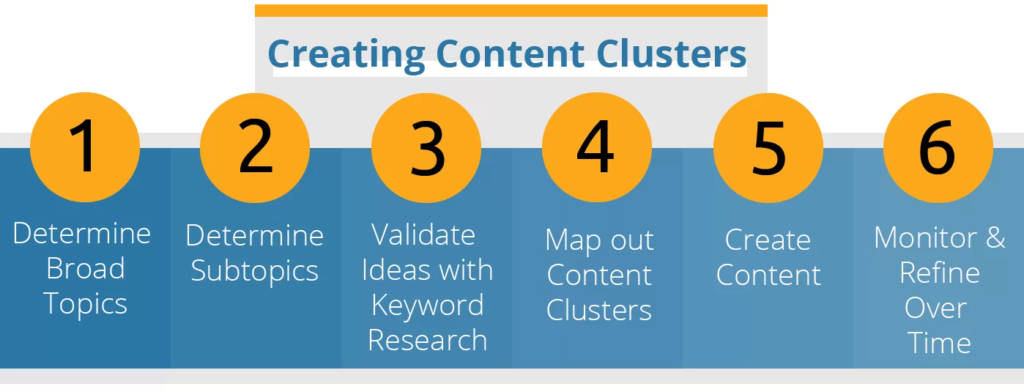
The content cluster model is the structural backbone of a multi-story content strategy. Here’s how it works: you create one comprehensive pillar page that covers a broad topic at a high level, then publish a series of cluster articles that explore specific subtopics in depth. Each cluster article links back to the pillar, and the pillar links out to the clusters. This internal linking structure tells search engines that your content is organized, authoritative, and interconnected.
For example, if your pillar topic is “personal finance,” your cluster articles might cover budgeting for beginners, how to pay off debt faster, investment strategies for your 30s, understanding credit scores, and retirement planning basics. Each cluster article is its own complete story with its own keyword target — but together, they reinforce the pillar page’s authority on the broader subject.
What makes this model powerful for SEO is compound growth. As each cluster article earns backlinks and traffic, it passes authority to the pillar page, which in turn boosts the rankings of the other cluster articles. Your Topics Multiple Stories don’t just generate Your Topics Multiple Stories — those stories actively strengthen each other over time. This is the engine behind content strategies that seem to accelerate the longer they run.
Mapping Angles: How to Find Different Stories Within the Same Topic
Not every story angle is obvious. After the beginner guide and the advanced tutorial, many content creators stall. The secret to finding more angles is deliberately shifting your lens on the topic. Here are six proven lenses that work across almost any subject:
- The Timely Lens: How does this topic connect to something happening right now? Seasonal relevance, trending news, or industry changes all create fresh entry points into existing topics.
- The Contrarian Lens: What does everyone get wrong about this topic? Articles that challenge conventional wisdom consistently earn high engagement because they promise a new perspective.
- The Case Study Lens: Can you show a real example of this topic in action? Concrete stories with results are among the most shared content formats on the web.
- The Comparison Lens: How does this approach compare to alternatives? Comparison content captures high-intent readers who are already deep in the decision-making process.
- The Data Lens: Is there original research, survey data, or statistics that tell a story about this topic? Data-backed content earns more backlinks than almost any other format.
- The Personal Lens: What is your own experience with this topic? First-person insight adds credibility and differentiates your content from AI-generated alternatives.
Rotating through these lenses ensures that Your Topics Multiple Stories never feel exhausted. A topic you’ve covered five times can yield ten more valuable stories simply by approaching it from a different direction.
Matching Stories to Formats and Channels
Even when you have a great story angle, publishing it in the wrong format or on the wrong channel limits its reach. Part of building a smarter content strategy is understanding that the same story told differently can connect with entirely different audiences.
A data-driven analysis of industry trends might work beautifully as a long-form article for search traffic, a slide deck shared on LinkedIn, and a five-minute podcast segment for audio audiences. A how-to guide might shine as a blog post, a YouTube tutorial, and a thread on a professional forum. This isn’t redundant content — it’s strategic amplification. You’re meeting different people where they already spend their time.
The key is to plan your format distribution before you start writing, not after. When you know a piece will become a blog post, a newsletter excerpt, and three social posts, you write it differently from the start. You include pull quotes, standalone stats, and modular sections that can be excerpted cleanly. This kind of upstream thinking saves enormous time in the content production process and ensures your stories get the distribution they deserve.
Building a Content Calendar That Supports Multiple Stories Per Topic
A smart content calendar isn’t just a schedule — it’s a visual map of how your stories connect. When you plan Your Topics Multiple Stories per topic, your calendar should reflect the relationships between pieces: which articles are part of the same cluster, which ones link to each other, and which are designed to funnel readers toward a conversion.
Start by assigning each month or quarter to a primary topic cluster. Within that period, plan your pillar piece, two to four cluster articles, and supporting social content. This batching approach means your team is in the same mental space for an extended period, which makes research faster, interviews more efficient, and internal linking more natural.
Stagger your publishing schedule so related pieces appear close together in time. When a reader finds your beginner guide, you want your intermediate guide to already be live and linked. This creates a reading journey that keeps audiences on your site longer, reduces bounce rate, and increases the chance of a newsletter signup or follow action. Content that’s strategically sequenced converts better than content published at random.
Repurposing vs. Recycling: The Difference That Defines Content Quality

There’s a critical distinction between repurposing content and recycling it. Recycling is lazy — you copy-paste your blog post into a newsletter or post the first paragraph on social media and call it done. Repurposing is strategic — you genuinely adapt the core story for a new format, new platform, and new audience.
When you repurpose well, the content feels native to its channel. A long-form article repurposed into a Twitter/X thread doesn’t read like an excerpt — it reads like a thread written specifically for that platform, with hooks, brevity, and conversational energy. A video script repurposed into a blog post doesn’t feel like a transcript — it’s restructured with headings, links, and SEO-optimized language. The underlying story is the same, but the execution is platform-specific.
This distinction matters because audiences are sophisticated. They can tell when content was designed for them or simply dumped in their feed. High-quality repurposing builds brand trust across channels; low-quality recycling erodes it. As you build your multi-story strategy, invest in the repurposing step — it’s where distribution meets creativity, and it’s what keeps your brand voice consistent across every platform.
Measuring the Performance of Your Multi-Story Content Strategy
You can’t improve what you don’t measure. A multi-story content strategy creates a lot of moving parts, so it’s important to track performance at both the individual piece level and the cluster level. At the individual level, monitor organic traffic, time on page, and conversion rate. At the cluster level, track overall topical keyword rankings and the internal link flow between pieces.
One of the clearest signals of a healthy multi-story strategy is what SEO professionals call keyword cannibalization avoidance. When your stories are properly differentiated by angle and keyword target, they support each other rather than compete. If you notice two cluster articles fighting for the same search ranking, it’s a sign they need to be merged, differentiated, or one needs to be redirected to the other.
Set a quarterly review cadence to assess which topics are generating the most compounding traffic, which story angles are earning backlinks, and which formats are driving the most engagement per channel. These insights should directly inform your next quarter’s content plan. The best content strategies aren’t built once — they’re refined continuously based on what the data tells you.
Future Outlook: Where Multi-Story Content Strategy Is Headed

As AI-generated content floods the web, the competitive advantage is shifting toward depth, originality, and authority. Search engines are already rewarding content that demonstrates genuine expertise and covers topics comprehensively. The multi-story approach isn’t just a current best practice — it’s the future-proof foundation of content that will survive algorithm changes.
Voice search, AI-powered answer engines, and personalized content feeds are all pushing in the same direction: toward content that answers specific questions with genuine authority. A brand that has published fifteen pieces on a topic — each from a different angle, each linking to the others — is far better positioned than one that published a single generic overview. The breadth of your topic coverage becomes your moat.
Expect the most successful content teams of the next few years to operate more like media companies, thinking in topic universes rather than individual articles. Tools that help map content gaps, track topical authority scores, and automate repurposing workflows will become standard in content operations. The brands that invest in building this infrastructure now will compound their advantage as the content landscape grows more competitive.
Conclusion
Building a smarter content strategy around Your Topics Multiple Stories doesn’t require more ideas — it requires seeing the ideas you already have with fresh eyes. Every topic you know well is a source of Your Topics Multiple Stories: beginner guides, expert analyses, case studies, contrarian takes, data reports, comparison pieces, and more. When you organize these stories into clusters, match them to the right formats and channels, and measure their performance rigorously, you create a content engine that grows stronger over time.
The most valuable shift in mindset is moving from “what should I write next?” to “what angle haven’t I covered yet?” That question, asked consistently across your topic library, is the engine of a content strategy that compounds. Start with one pillar topic this week. Map its angles. Plan its cluster. Publish its first piece. Then do it again.
Must Read The Article: Kathleen Nimmo Lynch Husband, Family, and Personal Life Revealed
(FAQs)
Q1: What does “your topics, multiple stories” mean in content strategy?
It refers to the practice of taking a single subject area and developing it into several distinct content pieces, each targeting a different angle, audience segment, or keyword. Instead of publishing one article per topic, you create a cluster of interconnected stories that together build stronger search authority and serve a wider audience.
Q2: How many stories can you realistically create from one topic?
Most topics can support anywhere from five to twenty pieces of content without becoming repetitive. The key is using different lenses — beginner vs. advanced, how-to vs. case study, timely vs. evergreen — and targeting different keyword variants within the topic area. Larger pillar topics can sustain even more stories over time.
Q3: Will publishing multiple articles on the same topic cause keyword cannibalization?
Only if the articles target the same keyword with the same intent. When each piece targets a distinct search query or a different stage of the buyer’s journey, they complement rather than compete with each other. Proper internal linking and clear differentiation between pieces prevents cannibalization.
Q4: How do I know which story angle to prioritize first?
Start with the angle that matches the highest search volume and most commercial intent for your audience. Typically, this means beginning with a foundational “what is” or “beginner’s guide” piece, then publishing more specific and advanced pieces as your cluster grows. Let search demand and audience questions guide your sequencing.
Q5: Is repurposing content across formats the same as duplicating content?
No. Repurposing means adapting a story for a new platform or format — changing the structure, language, and presentation to fit the context. Duplication means copying the same text and publishing it in multiple places. Search engines penalize true duplication, but they have no issue with a blog post and a YouTube video that cover the same story in different ways.
Q6: How long does it take to see results from a multi-story content strategy?
Most content strategies show meaningful organic traffic results in three to six months, with compounding growth continuing well beyond that. Cluster strategies tend to accelerate once several pieces are live and linking to each other, as the internal link equity strengthens the entire group simultaneously.
Q7: Do small brands or solo creators benefit from this approach, or is it only for large teams?
This approach is especially powerful for solo creators and small teams because it maximizes the return on every research effort. Instead of spending hours researching a new topic each week, you spend that time exploring new angles on subjects you already know well. The result is higher-quality content published more consistently — a significant advantage regardless of team size.
Related Topics: