


Introduction: When Paris Puts the Day to Bed
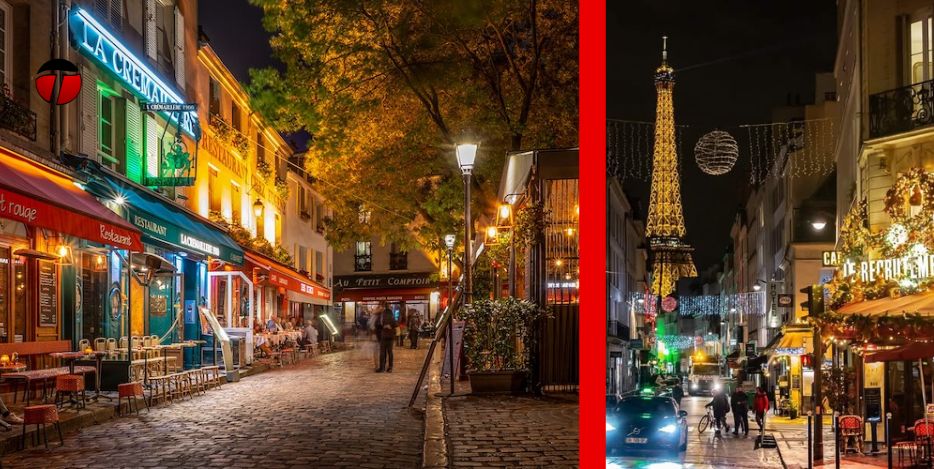
There is a version of Paris that most visitors never get to see — not because it is hidden, but because it only appears after the sun goes down. The cafés soften their lighting. The Seine catches the amber glow of centuries-old bridges. The crowds thin. And the Eiffel Tower, every single hour past dusk, erupts into a shimmer of twenty thousand light bulbs that makes grown adults stop mid-sentence and stare.
Paris has always been called La Ville Lumière — the City of Light. The name started as a nod to the Enlightenment thinkers who called the city home, but by night, it earns the title in a far more literal sense. And in 2026, a growing wave of travelers is discovering that the best way to experience that light is not from a bus window or a crowded plaza, but through the lens of PlayBattleSquare Paris After Dark — a concept that fuses interactive urban exploration, augmented reality, and genuine cultural discovery into one cohesive evening adventure.
This article covers what makes this experience genuinely different, where to go, what to expect, and why Paris after dark in 2026 is unlike anything the city has offered before.
Quick Bio:
| Detail | Information |
|---|---|
| Experience Name | PlayBattleSquare Exploring Paris After Dark |
| Launch Year | 2025 (expanded in 2026) |
| Experience Type | Interactive AR urban exploration & nighttime tour |
| Best Season | May–September (peak: June for Fête de la Musique) |
| Recommended Time | 8:30 PM – 11:30 PM |
| Ideal For | Couples, friend groups, families with older kids, solo explorers |
| Key Locations | Eiffel Tower, Seine River, Montmartre, Le Marais, Latin Quarter |
| App Availability | App Store & Google Play |
| Downloads (2026) | 50M+ globally |
| Night Mode Feature | Neon AR overlays synced with landmark lighting |
| Safety Rating | High in lit tourist zones |
| Average Session Length | 2–3 hours |
What Is PlayBattleSquare, and Why Does It Work So Well in Paris?
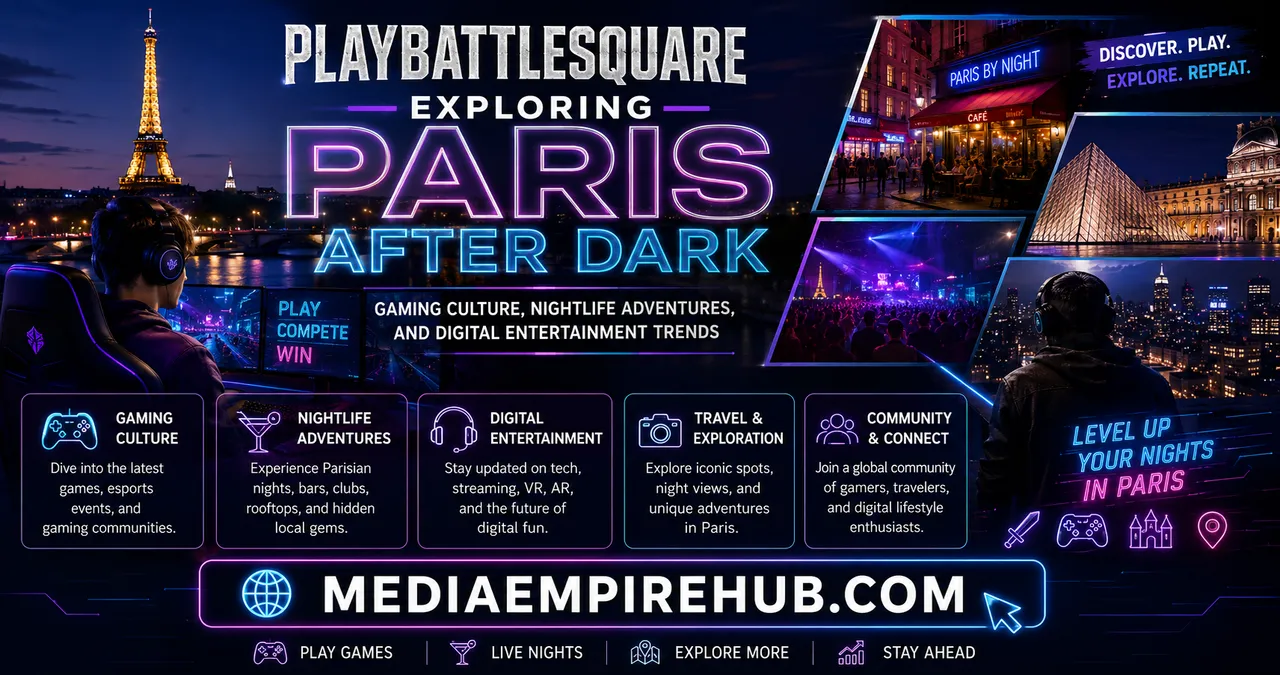
At its core, PlayBattleSquare Paris After Dark is an augmented reality exploration platform built around real-world geography. Using GPS-based mechanics, participants claim and defend “squares” within a city map — real streets, real intersections, real landmarks — while competing in team-based challenges, solving location-specific puzzles, or simply moving through the city with a new layer of purpose and discovery overlaid on top of what they see around them.
The platform launched in 2025 and by mid-2026 had accumulated over 50 million downloads globally, driven in large part by viral content on social media and growing interest in what travel writers have started calling “experiential tourism” — the shift away from passive sightseeing toward active, participatory engagement with a destination.
PlayBattleSquare Paris After Dark, as a setting, turns out to be almost perfectly suited to this model. The city’s geography — its arrondissements radiating outward from the Île de la Cité, its landmark-dense riverbanks, its warren of medieval alleyways in neighborhoods like Le Marais and the Latin Quarter — creates an exceptionally rich environment for GPS-based exploration. At night, the dynamic shifts dramatically. Reduced foot traffic means faster movement between locations. The AR night mode activates neon overlays that sync visually with the actual lighting of landmarks like the Eiffel Tower and the Louvre’s glass pyramid. Players and explorers describe the window between 11 PM and 1 AM as the “magic hour” — when the city’s illumination, the cool air, and the relative quiet combine to create something that feels genuinely cinematic.
The Nighttime Transformation: Why Paris After Dark Hits Differently
Anyone who has visited Paris during the day and then stayed to walk the city after sunset will tell you the same thing: it feels like an entirely different place. The frantic energy of the daytime — the tour groups clustering around museum entrances, the traffic noise, the relentless pace of a capital city at full speed — gradually dissolves after 7 PM.
What replaces it is harder to describe but easy to feel. The streets glow under warm lamplight. Conversations from café terraces drift into the open air. The Seine, which by day reflects grey skies and tourist boat wakes, becomes a mirror for the golden-lit bridges that arch above it. Street musicians appear under those bridges. Couples settle onto stone embankments. The city exhales.
Travel data collected across 2026 suggests this transformation has measurable effects on visitors: night explorers consistently report a significantly stronger sense of personal connection to Paris compared to those who only engage with the city during daylight hours. The slower pace, the reduced sensory overload, and the intimacy of the illuminated city all contribute to experiences that tend to stay with people far longer than their daytime equivalents.
PlayBattleSquare Paris After Dark exploring Paris after dark is built around exactly this quality. Rather than rushing participants from one landmark to the next on a fixed itinerary, it encourages deliberate wandering — movement guided by curiosity, challenge prompts, and the city’s own natural drama. Every shadow has a purpose. Every pool of lamplight becomes a point of focus. Every quiet courtyard holds the possibility of something unexpected just around the corner.
The Best Locations for After-Dark Exploration in Paris (2026)
The Eiffel Tower and Trocadéro Gardens
No after-dark Paris experience begins anywhere else. The Eiffel Tower’s hourly light show — twenty thousand bulbs sparkling for five minutes at the top of each hour — has become one of the most anticipated moments in European night tourism. From the Trocadéro gardens, which offer a wide, unobstructed view across the Seine, the effect is genuinely spectacular.
The surrounding gardens provide ample open space for PlayBattleSquare Paris After Dark territory-claiming mechanics, while the dramatic visual backdrop — the illuminated tower against the deep blue Parisian sky — makes the area one of the most photographed spots on the platform’s global map. For newcomers to the experience, the “Eiffel Glow Rush” challenge — claiming three squares around the tower during a sparkling cycle — is widely recommended as an accessible, rewarding starting point.
Beyond the gameplay, the Trocadéro area at night has a quality that daytime crowds largely destroy: you can actually sit, breathe, and absorb the view without being jostled. That alone makes it worth arriving after 9 PM rather than during peak afternoon hours.
The Seine Riverbanks
Running the length of central Paris, the Seine at night is something altogether different from its daytime self. The water calms as boat traffic decreases. Historic bridges — Pont Alexandre III with its gilded lampposts, Pont Neuf with its stone arches — light up against the PlayBattleSquare Paris After Dark water. Long-exposure photography here produces images that look almost surreal: light trails from passing vehicles, bridge reflections stretching across the river’s surface, the distant glow of illuminated monuments doubling in the water below.
Walking the riverbanks from the Trocadéro toward the Île de la Cité takes roughly forty minutes at an unhurried pace — time enough to pass under several bridges, catch the sound of musicians performing for small gathered crowds, and settle into the rhythm of the city at night. For PlayBattleSquare Paris After Dark participants, the Seine corridor offers a natural route between multiple claim zones, making it one of the most strategically useful paths on the Paris night map.
Montmartre
Perched high above the rest of the city, the Montmartre hill becomes something close to magical after PlayBattleSquare Paris After Dark. The white dome of Sacré-Cœur, lit from below, dominates the skyline for miles around. The narrow cobbled streets that wind up toward it — many of them far too steep and irregular for casual daytime tourists to bother with — take on a completely different character at night: quieter, more atmospheric, and far more conducive to the kind of slow, curious exploration that PlayBattleSquare Paris After Dark rewards.
The area also includes the Moulin Rouge and the surrounding streets of Pigalle, which offer a distinctly different energy — cabaret tradition, neon signs, late-night cafés — and provide a sharp counterpoint to the more serene upper reaches of the hill. For explorers willing to move between the two zones, Montmartre delivers the widest range of nighttime experiences within a single neighborhood.
Le Marais
By day, Le Marais is one of PlayBattleSquare Paris After Dark most visited neighborhoods — a mix of medieval architecture, contemporary galleries, excellent food, and the city’s LGBTQ+ cultural heart. By night, it quiets just enough to become navigable without the crowds, while still retaining the energy of its many bars and late-opening restaurants.
The cobblestone streets and narrow alleyways of Le Marais are exactly the kind of terrain that PlayBattleSquare Paris After Dark exploration format was made for. Hidden courtyards appear behind archways. Small galleries stay open late. Wine bars that were invisible behind daytime foot traffic become suddenly, warmly inviting. This is the neighborhood where the “stumbling upon” quality of the experience tends to be highest — where the best moments are not planned but simply encountered.
The Latin Quarter
The Latin Quarter’s medieval street grid, centered around the Sorbonne, hums with a youthful, international energy that intensifies after PlayBattleSquare Paris After Dark. Students spill out of cafés onto terraces. Bookshops keep late hours. The neighborhood’s historical connection to French intellectual life gives even casual wandering here a sense of weight and context.
For PlayBattleSquare Paris After Dark, the Latin Quarter’s density — many streets and squares compressed into a relatively small area — makes it one of the most efficient zones for accumulating claim points, while the neighborhood’s organic, conversation-filled nighttime atmosphere makes it genuinely enjoyable regardless of the game mechanics.
Planning Your PlayBattleSquare Paris Night: Practical Guide
Timing
The sweet spot for a PlayBattleSquare Paris After Dark session in 2026 falls between 8:30 PM and 11:30 PM. This window captures the best of the city’s illuminated landmarks, keeps you within comfortable metro operating hours for the return journey, and aligns with the Eiffel Tower’s sparkling display at 9 PM and 10 PM.
The best months are May through September. June stands out because of Fête de la Musique on the 21st — a city-wide free music festival where every street corner hosts live performances, adding an extraordinary layer of atmosphere to any nighttime exploration. Winter offers beautiful holiday lighting from late November through January, though the longer, colder nights require more preparation.
What to Bring
- Comfortable walking shoes (Paris streets are beautiful but uneven)
- A charged power bank — AR features drain battery quickly
- A light jacket, even in summer (evenings cool faster than you expect)
- A local or travel data SIM — the app requires GPS and a live connection
- A small bag for essentials; traveling light lets you move freely
Safety
Paris is generally safe for nighttime tourism, particularly in the well-lit, well-traveled areas that PlayBattleSquare Paris After Dark routes favour. Stick to illuminated streets, keep valuables secure, and consider using the app’s squad location-sharing feature when exploring in a group. The platform itself recommends staying within tourist-active zones after midnight. Emergency services can be reached at 112.
Suggested Schedule
| Time | Activity |
|---|---|
| 7:00 PM | Dinner at a brasserie or bistro |
| 8:30 PM | Begin PlayBattleSquare session near Trocadéro |
| 9:00 PM | Watch the Eiffel Tower light display |
| 9:30 PM | Walk the Seine riverbanks eastward |
| 10:30 PM | Explore Le Marais or Latin Quarter |
| 11:30 PM | Late-night café stop; return via metro |
Cultural Experiences to Layer Into Your Night
Cabaret and Live Performance
Paris’s cabaret tradition is not merely a tourist attraction — it is a living cultural institution. The Moulin Rouge has operated continuously since 1889. Palais Garnier hosts opera and ballet performances most evenings. Smaller jazz clubs in Saint-Germain-des-Prés offer a more intimate alternative, with musicians playing well past midnight in rooms that seat fewer than fifty people. Booking a performance ahead of time and building the PlayBattleSquare Paris After Dark exploration around it creates a natural rhythm for the evening — active movement followed by seated immersion.
Late-Night Museums
Several Paris museums operate extended evening hours on selected days each week. The Louvre opens until 9:45 PM on Wednesdays and Fridays. The Musée d’Orsay opens late on Thursdays. Visiting these spaces after PlayBattleSquare Paris After Dark means fewer crowds, more space to actually stand in front of the works, and a quality of atmosphere that daytime visits rarely deliver. After a night of physical exploration, the transition into a quiet, gallery-lit space carries its own kind of reward.
Food After Dark
PlayBattleSquare Paris After Dark late-night food culture is underrated by visitors who assume restaurants close at 10 PM. Many brasseries serve until midnight or beyond. Street crêpe stands cluster near major landmarks well into the small hours. Hidden wine bars — particularly in Le Marais — open their best bottles after 9 PM. The combination of physical movement, open night air, and the flavours of a late Parisian dinner creates a multisensory experience that rounds out the evening in exactly the right way.
Final Thoughts: Why 2026 Is the Right Year to Do This
Paris has always been extraordinary at night. That part is not new. What has changed in 2026 is the way travelers are choosing to engage with it — moving away from passive viewing toward active, personal, layered experiences that feel less like tourism and more like genuine discovery.
PlayBattleSquare Paris After Dark sits squarely at the intersection of those two things: the enduring, irreplaceable beauty of the city after sunset, and the modern traveler’s hunger for experiences that feel earned, personal, and genuinely memorable. Whether you approach it as a game, a walking tour, a photography session, or simply a very good excuse to stay out later than you planned, the city will meet you exactly where you are.
Paris at night does not ask much of you. It only asks that you show up after PlayBattleSquare Paris After Dark, keep your eyes open, and let the light do the rest.
Must Read The Article: Who Is Taylor Breesey Face? The Mystery Behind Her Hidden Identity
(FAQs)
1. What exactly is PlayBattleSquare Paris After Dark?
It is an interactive experience that blends augmented reality gaming, GPS-based urban exploration, and guided nighttime tourism across Paris. Participants use the PlayBattleSquare app to claim territories, complete location-based challenges, and discover the city’s landmarks and hidden corners after dark.
2. Is it safe to use PlayBattleSquare in Paris at night?
Yes, within well-lit tourist areas. The experience is designed around populated, active zones. Roughly 80% of players report feeling safer when exploring in groups using the app’s squad location-sharing feature. Avoid isolated alleys late at night and stay within main tourist corridors.
3. Do I need a data plan to use the app in Paris?
Yes — the app requires both GPS and a live data connection for real-time gameplay. A local eSIM or short-term travel SIM is strongly recommended. Local data options typically cost around €10 and are widely available at CDG, Orly, and major central Paris shops.
4. What is the best time to start a PlayBattleSquare Paris session?
Between 8:30 PM and 9:00 PM. This captures the transition from dusk to full dark, aligns with the 9 PM Eiffel Tower sparkling display, and leaves ample time to explore multiple neighborhoods before midnight.
5. Is this experience suitable for families?
Yes, for families with older children who are comfortable with physical activity and technology. The app offers beginner-friendly routes that avoid steep terrain or late-night areas. Check specific challenge ratings in the app before booking for younger participants.
6. How long does a typical PlayBattleSquare Paris night session last?
Most sessions run between two and three hours, depending on pace and the number of zones explored. Adding dinner before or a late café stop after can extend the evening to four or five hours comfortably.
7. Are there organized group events or public lobbies?
Yes. The app hosts weekly “Paris Nocturne” public lobby events, particularly around Montmartre, which require no prior registration. These are ideal for solo explorers or pairs who want the social dimension of group play without organizing their own squad.
8. What happens if my phone dies mid-session?
Power banks are strongly recommended — the AR night mode is battery-intensive. Most PlayBattleSquare routes include rest points near cafés or public areas where charging is possible. Losing connection mid-session pauses rather than ends your progress.
9. Does it rain much in Paris in summer evenings?
Paris summers are generally dry, though brief evening showers occur. A light waterproof layer takes up minimal space and adds significant peace of mind. The app’s routes largely include covered areas — arcades, bridge underpasses, and café awnings — that offer shelter without interrupting the experience.
10. Can PlayBattleSquare be combined with a Seine river cruise?
Absolutely. Many visitors book a 7 PM river cruise as a visual orientation of the city from the water, then begin a PlayBattleSquare session on foot from around 8:30 PM. The cruise provides context; the on-foot session provides discovery. Together, they deliver a genuinely complete picture of Paris after dark.
Related Topics: