


Introduction
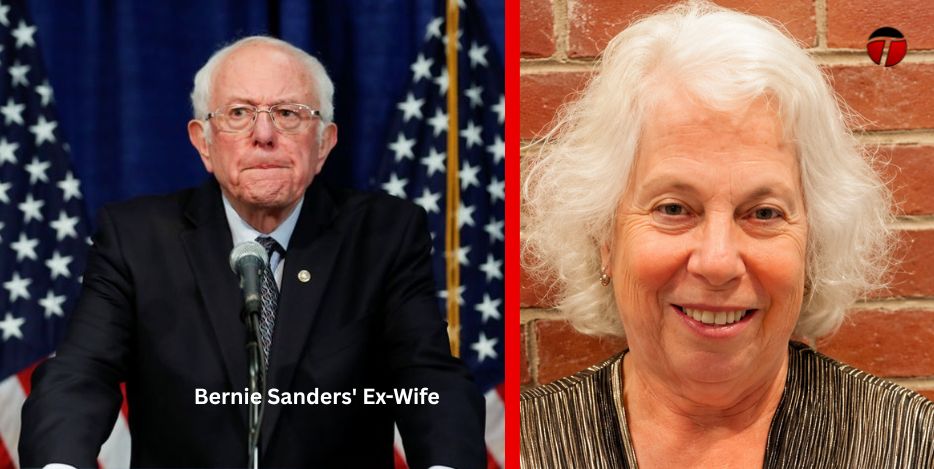
In American politics, Bernie Sanders is a household name. A two-time presidential candidate, longtime U.S. Senator from Vermont, and one of the most recognizable progressive figures of the modern era — Sanders has been under the public microscope for decades. But long before the rallies, the Senate floor speeches, and the iconic mittens, there was a young couple living in a small wooden shack in the Vermont countryside with no electricity and big dreams. One half of that couple was Deborah Shiling, the woman who became Bernie Sanders’ first wife in 1964.
Deborah Shiling is not a public figure by any stretch of the imagination. She has never sought the spotlight, never written a memoir, and has largely remained invisible to the media despite her indirect connection to one of America’s most talked-about politicians. Yet every few years, when Sanders steps back into the news cycle, her name resurfaces — and with it, a wave of curiosity about who she really is, what her life looked like, and where she is today. For a woman who has spent most of her adult life deliberately avoiding attention, that curiosity is both understandable and telling.
This article takes a careful, respectful, and thorough look at Deborah Shiling’s story — from her activist roots in Baltimore to her brief but formative marriage to Bernie Sanders, her quiet reinvention in Vermont, and what her life looks like in 2026. While the full picture is necessarily incomplete given her preference for privacy, what we do know paints the portrait of a thoughtful, principled woman who chose authenticity over fame.
Quick Facts:
| Detail | Information |
|---|---|
| Full Name | Deborah Shiling (later Deborah Messing) |
| Birth Year | 1944 |
| Birthplace | Baltimore, Maryland, USA |
| Nationality | American |
| Father | Dr. Moses Shiling (Chief of Pulmonary Diseases, Sinai Hospital, Baltimore) |
| Education | University of Chicago (Political Science) |
| First Marriage | Bernie Sanders (September 1964 – 1966) |
| Second Marriage | Bob Messing (married c. 1967) |
| Career | Buyer at Hunger Mountain Co-op, Montpelier, Vermont (~20 years) |
| Current Residence | Vermont (as of 2024–2026) |
| Social Media | None |
| Children | One daughter (with Bob Messing, born c. early 1970s) |
A Baltimore Upbringing: Deborah Shiling’s Early Life and Family
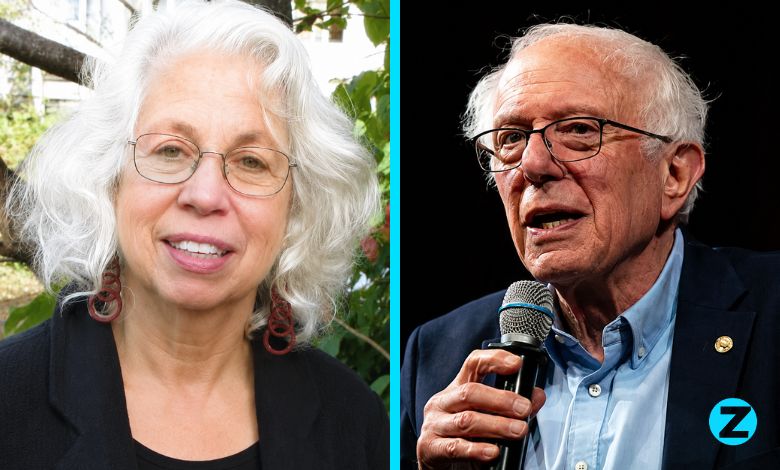
Deborah Shiling was born in 1944 in Baltimore, Maryland, into a family that valued education and public service. Her father, Dr. Moses Shiling, was a respected physician who served as the chief of pulmonary diseases at Sinai Hospital in Baltimore — a position that carried significant professional prestige in the city. Growing up in a household headed by a doctor and civil servant likely shaped Deborah’s own sense of social responsibility and community engagement from an early age.
Very little has been publicly documented about her childhood, her mother, or her siblings. This is consistent with the quiet, private nature she has maintained throughout her adult life. What is known is that she completed her secondary schooling in Baltimore and went on to pursue higher education at one of the country’s most respected academic institutions — the University of Chicago. The fact that she chose to study Political Science speaks volumes about her intellectual curiosity and her awareness of the world’s social and political fault lines, especially during the turbulent 1960s.
Her early activism predates her time at university. Reports indicate that Deborah joined the Congress of Racial Equality (CORE) in 1960, when she was still a teenager. She participated in sit-ins at segregated restaurants in Baltimore, placing herself on the front lines of the civil rights movement at a time when such actions carried real personal risk. These were not performative gestures — they were acts of genuine moral courage in a deeply divided American city. Deborah Shiling’s sense of justice, it seems, was not borrowed from a famous companion. It was hers long before she ever met Bernie Sanders.
How Deborah Shiling Met Bernie Sanders
The story of how Deborah Shiling and Bernie Sanders came to know each other is, in many ways, a very American story of the 1960s. Both were students at the University of Chicago, both were passionate about social justice, and both were swimming in the intellectual and political current of a decade that was reshaping the country. Their connection was grounded not in glamour, but in shared conviction.
Sanders, who was studying political science and was deeply involved in campaigns against racially segregated housing on campus, found a kindred spirit in Deborah. The two reportedly spent time together volunteering at an Israeli kibbutz called Sha’ar HaAmakim, an experience that would have reinforced their shared values around community, equality, and collective responsibility. It was the kind of bond forged not over dinner dates but over causes, debates, and a mutual belief that the world could and should be fairer.
Their friendship deepened into romance over the course of their college years. By 1963 or 1964, they had decided to formalize their relationship with marriage. Their courtship was as unconventional as the era demanded — two idealistic young people who believed in what they were building together, both personally and politically. It is worth noting that Deborah was, in many respects, Sanders’ intellectual equal during this period, not simply a companion but a fellow activist and thinker. Understanding this context matters when we consider what their marriage actually looked like.
The Marriage: A Sugar Shack, No Electricity, and the Vermont Dream
Deborah Shiling and Bernie Sanders were married on September 6, 1964, in a ceremony held in the garden of Deborah’s parents’ home in Baltimore. By all accounts, it was a modest and personal occasion — not a lavish event, but something intimate and sincere, fitting for two young people more interested in ideas than appearances.
Shortly after their wedding, the couple made a bold and somewhat unconventional decision: they moved to the Vermont countryside. Specifically, they purchased a piece of land in the small hamlet of Middlesex, just outside Montpelier, the state capital. The property — 85 acres of land with a wooden structure known as “The Sugar Shack” — cost them $2,500. By today’s standards, that sounds like a bargain; by the standards of two young idealists with limited income in 1964, it was still a significant investment in a particular kind of life.
The Sugar Shack had no electricity. The couple lived there for roughly 18 months, navigating the practical realities of a rural, off-grid existence while remaining philosophically committed to a simpler, more meaningful way of life. This period is often mentioned in passing in articles about Bernie Sanders, but it deserves more considered attention. Choosing to live this way was not a novelty for the couple — it was an expression of values. The Vermont back-to-the-land ethos that would later define a generation of progressives was, for Deborah and Bernie, simply how they lived.
Unfortunately, the marriage did not survive beyond 1966. After approximately two years together, the couple divorced. The exact reasons have never been publicly disclosed by either party, and Deborah in particular has been steadfastly tight-lipped about this chapter of her life. What is evident is that the divorce was relatively quiet and that both individuals moved on without bitterness. When asked about Sanders years later, Deborah reportedly said she would not speak much about him — but that she believed in him. That small, careful statement reveals a great deal about her character.
Life After Bernie Sanders: Remarriage and a New Chapter
Following her divorce from Sanders in 1966, Deborah Shiling did not remain in public view. She remarried relatively quickly — reportedly tying the knot with a man named Bob Messing around 1967, just a year after her divorce. Deborah herself has described Bob in characteristically understated and affectionate terms as “a poet slash logger slash philosopher” — a description that suggests a man of substance, creativity, and independence, not unlike the kind of person Deborah herself appears to be.
The couple settled in Vermont, not far from Montpelier, and built a life together that was notably removed from the political spotlight. Reports indicate they lived in a house on a steep hill less than a mile from the capital, a location that combines proximity to the small-town community with a sense of deliberate retreat from the wider world. They had at least one daughter together, born in the early 1970s, though her name has never been publicly disclosed, consistent with the family’s preference for privacy.
Deborah took the surname Messing after her second marriage, which is how she is sometimes referred to in more recent coverage. The change of name also, perhaps intentionally, created a degree of separation between her current identity and her past association with Bernie Sanders. Whether or not that was the intent, it had that effect — for years, even journalists who were aware of Deborah’s existence found it difficult to track down much information about “Deborah Messing” that wasn’t already connected to the Sanders story.
Her Career: A Buyer at Hunger Mountain Co-op for Two Decade

One of the most concrete and verifiable facts about Deborah Shiling’s professional life is her long tenure at Hunger Mountain Co-op in Montpelier, Vermont. She worked there as a buyer for approximately 20 years — a career choice that is entirely consistent with the values she demonstrated as a young woman in the 1960s.
The Hunger Mountain Co-op is no ordinary grocery store. It is a 20,000-square-foot, community-owned natural foods cooperative that operates on principles of sustainability, local sourcing, and cooperative economics. With around 170 employees, more than 500 local vendors, and over 8,000 member-owners, it is a serious institution in Vermont’s food and farming community. Working as a buyer for such an organization requires real skill — knowledge of local producers, an understanding of supply chains, relationships with vendors, and a commitment to the co-op’s mission.
Deborah’s two-decade career at the co-op suggests she found genuine purpose and fulfillment in this work. It was not a glamorous role, but it was meaningful — exactly the kind of quiet, community-rooted contribution that defines her story. She was not behind a podium or in the pages of national newspapers. She was making decisions that connected Vermont farmers to Vermont eaters, day after day, year after year. For someone with her background and values, that is not a consolation prize. It is the thing itself.
Where Is Deborah Shiling in 2026?
As of 2026, Deborah Shiling — now known as Deborah Messing — is believed to be living in Vermont, where she has spent the vast majority of her adult life. She would be in her early 80s, having been born in 1944. She has reportedly retired from her work at Hunger Mountain Co-op and continues to maintain the private existence she has cultivated over the course of her life.
There is no evidence that Deborah has any social media presence, has given interviews, or has sought to re-enter public life in any capacity. She does not appear to have a Wikipedia page of her own and is almost entirely absent from the digital footprint that defines most people’s public identity in the modern era. That absence is not accidental — it is the result of deliberate, sustained choices over many decades.
What is perhaps most striking about Deborah Shiling’s story in 2026 is not what we know about her, but what her choices tell us. In an age when nearly everyone connected to a prominent public figure eventually writes a book, gives a podcast interview, or seeks some form of recognition, Deborah has done none of these things. She married a man before he was famous, helped build a life with him in the Vermont countryside, parted ways quietly, built a new life with a different partner, raised a family, worked in her community, and faded from public view with quiet intentionality. There is something quietly admirable about that.
Deborah Shiling vs. Jane Sanders: Bernie’s Two Very Different Marriages
It is worth briefly contextualizing Deborah Shiling’s place in Bernie Sanders’ personal history. After their divorce in 1966, Sanders had a relationship with a woman named Susan Campbell Mott, with whom he had his only biological child, a son named Levi Sanders, born in 1969. Sanders and Mott did not marry, but Sanders has remained on good terms with her over the years.
In 1988, Bernie Sanders married Jane O’Meara Driscoll, who has been his partner ever since and is widely known as Jane Sanders. Jane has been a visible and active figure in Sanders’ political life, appearing alongside him during both his 2016 and 2020 presidential campaigns and serving as a trusted adviser and public surrogate. The contrast between Jane Sanders’ public role and Deborah Shiling’s invisibility is stark — and it speaks to two very different kinds of marriages and two very different kinds of people.
Deborah’s brief marriage to Sanders occurred when he was a young, unknown idealist with no political career to speak of. Jane’s marriage came after Sanders had already served as mayor of Burlington and entered Vermont politics. The contexts are entirely different, and so are the relationships. Deborah Shiling’s connection to Bernie Sanders is, in historical terms, a footnote — but it is a footnote that illuminates something about who both of them were before fame and public life reshaped everything.
The Woman Behind the Name: What Deborah Shiling’s Story Really Tells Us
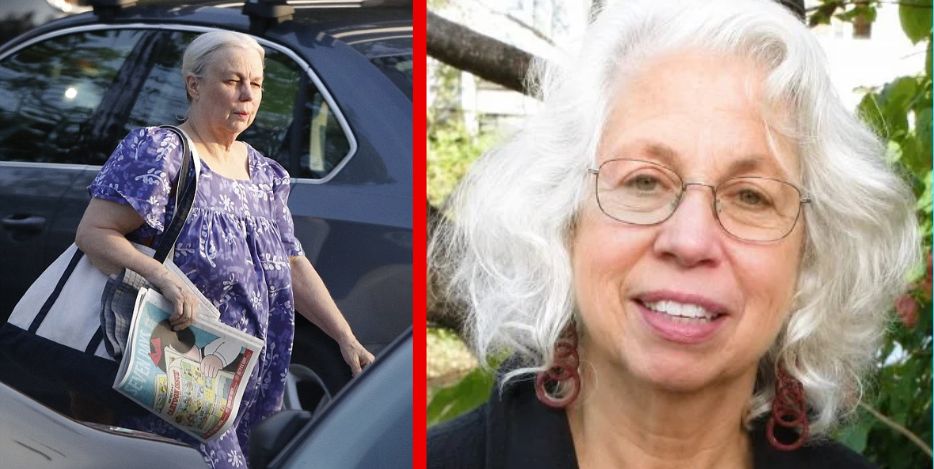
There is a risk, in writing about someone like Deborah Shiling, of reducing her to a supporting character in someone else’s biography. She is not that. She is a woman who joined the civil rights movement as a teenager, pursued higher education at a rigorous institution, built a working marriage with a complicated man, navigated its end with grace, rebuilt her life on her own terms, and spent two decades contributing to her community through meaningful work. The fact that she was once married to Bernie Sanders is the least interesting thing about her.
What her story really tells us is something about the choices available to people, particularly women, who found themselves adjacent to power and chose not to claim it. Deborah could, at almost any point in the last few decades, have sold her story. During the 2016 and 2020 presidential campaigns, her name appeared briefly in various media outlets, and her perspective on the young Bernie Sanders would have been commercially valuable. She declined every such opportunity.
That restraint reflects either a deep personal privacy, a deep respect for the life she has built, or both. In a media landscape that rewards confession and exposure, Deborah Shiling’s silence is, paradoxically, one of the most eloquent things about her. She has constructed a life on her own terms, away from the narrative of her most famous relationship, and that is a form of freedom worth recognizing.
Conclusion
The story of Deborah Shiling is, in many ways, the story of a woman who refused to be defined by a relationship. She was a civil rights activist before she met Bernie Sanders, an independent woman who navigated a difficult divorce and rebuilt her life, and a committed community worker who spent two decades contributing to cooperative economics in Vermont. The fact that she is primarily known as someone’s ex-wife is a limitation of how we tell stories about people — not a limitation of who she is.
In 2026, Deborah Shiling lives quietly in Vermont, far from the world that continues to produce headlines about the man she once shared a Sugar Shack with more than six decades ago. She has chosen this quietness deliberately, and there is something to be learned from that choice. Not every person touched by fame needs to be consumed by it. Some people simply live their lives — thoughtfully, purposefully, and on their own terms. Deborah Shiling appears to be one of those people, and that is worth more than any amount of public recognition.
Must Read The Article: Jaleel White Daughter and Wife: Everything Fans Want to Know in 2026
(FAQs)
Q1: Who is Deborah Shiling?
Deborah Shiling is an American woman best known as the first wife of Senator Bernie Sanders. Born in Baltimore, Maryland in 1944, she was a civil rights activist and political science student at the University of Chicago who married Sanders in September 1964. After their divorce in 1966, she built a private life in Vermont, where she remarried and worked for approximately 20 years as a buyer at the Hunger Mountain Co-op in Montpelier. She currently goes by the name Deborah Messing.
Q2: When did Deborah Shiling and Bernie Sanders get married and divorce?
They married on September 6, 1964, at a ceremony held in the garden of Deborah’s parents’ home in Baltimore, Maryland. The couple divorced in 1966 after approximately two years of marriage. During that time, they lived together in a rural property in Middlesex, Vermont, known as “The Sugar Shack,” a wooden structure without electricity on 85 acres of land.
Q3: Did Deborah Shiling have children with Bernie Sanders?
No. Deborah Shiling and Bernie Sanders did not have children together. Sanders’ only biological child, a son named Levi Sanders, was born in 1969 to Susan Campbell Mott, a woman Sanders dated after his divorce from Deborah. Sanders later married Jane O’Meara in 1988 and adopted her three children.
Q4: Who did Deborah Shiling marry after Bernie Sanders?
After her divorce from Sanders in 1966, Deborah married a man named Bob Messing around 1967. She affectionately describes Bob as “a poet slash logger slash philosopher.” The couple have remained together in Vermont and had at least one daughter together, born in the early 1970s. Deborah has been known as Deborah Messing since her remarriage.
Q5: What did Deborah Shiling do for work?
Deborah Shiling worked for roughly 20 years as a buyer at the Hunger Mountain Co-op, a community-owned natural foods cooperative in Montpelier, Vermont. The co-op has over 8,000 member-owners and more than 500 local vendors. She has since retired from that role and continues to live privately in Vermont.
Q6: Where is Deborah Shiling now in 2026?
As of 2026, Deborah Shiling — now Deborah Messing — is believed to be living in Vermont, where she has resided for most of her adult life. In her early 80s, she has retired from professional life and maintains a deeply private existence, with no known social media presence or public appearances. She has consistently declined to engage with the media or share her story publicly.
Q7: Has Deborah Shiling ever spoken publicly about Bernie Sanders?
Deborah Shiling has very rarely commented on her first marriage or on Sanders. On one notable occasion, when asked about him, she reportedly stated that she would not speak much about him — but that she believed in him. This brief, dignified statement is one of the very few public remarks attributed to her on the subject. She has declined all known interview requests and has not written about her experiences or her time with Sanders.
Related Topics: