


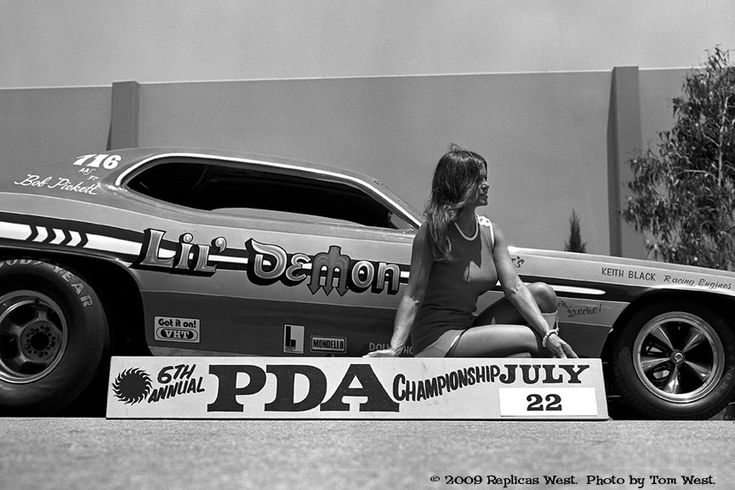
If you’ve spent any time scrolling through vintage motorsport photos online, chances are you’ve come across a striking image of a woman with long, sun-streaked hair, knee-high go-go boots, and a smile that seems to outshine the dragster idling behind her. That woman is Barbara Roufs, and for a brief but unforgettable stretch of the 1970s, she was one of the most recognizable faces in American drag racing.
Roufs wasn’t a driver, a mechanic, or a team owner. She was a trophy girl — the woman who handed winners their hardware at the end of a quarter-mile run — but her presence at Southern California’s drag strips turned a ceremonial role into something far more memorable. Decades after her career ended, her photographs continue to circulate among racing fans, vintage car enthusiasts, and a new generation of internet users who stumble upon her image and immediately want to know more.
This article pulls together what’s known about Barbara Roufs: her background, her rise within the drag racing scene, her signature look, her family life, and the quiet, tragic end to her story. It also looks at why, more than fifty years after she first stepped onto a winner’s podium, people are still searching her name.
Quick Facts:
| Category | Details |
|---|---|
| Full Name | Barbara Roufs (referred to in some biographical accounts as Barbara Jean Riley) |
| Born | 1944, Clovis, California, USA |
| Died | January 1991, Fresno, California, USA (age 47) |
| Occupation | Drag racing trophy girl, promotional model |
| Known For | Trophy presentations at Orange County International Raceway and other Southern California drag strips |
| Notable Title | Crowned queen at the 6th Annual U.S. Professional Dragster Championship; later associated with the Professional Dragster Association (PDA) |
| Era of Fame | Late 1960s through the 1970s |
| Spouse | Surname Dougherty (identity not publicly confirmed) |
| Daughter | Jet Dougherty |
| Associated Photographer | Tom West |
| Resurgence | Photos rediscovered and shared online beginning around 2016 |
Who Was Barbara Roufs? Early Life and Background
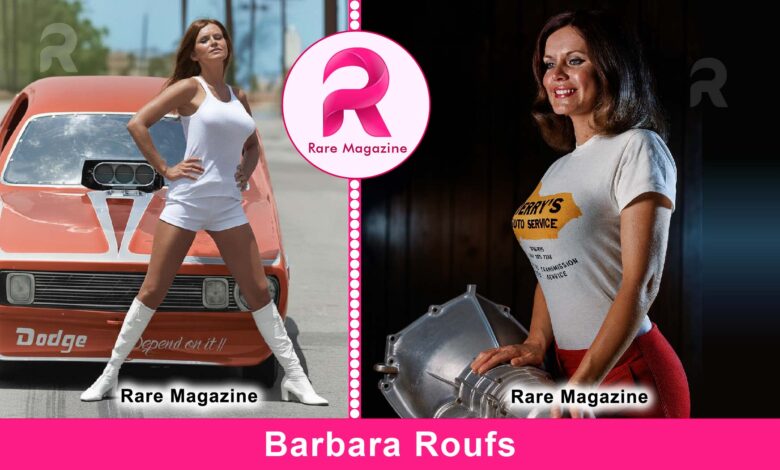
Barbara Roufs was born in 1944 in Clovis, California, a small city near Fresno that, like much of Southern and Central California at the time, was steeped in car and motorsport culture. According to several biographical accounts, her father raced motorcycles competitively, which may help explain her early comfort around engines, speed, and the racetrack environment she would later make her own.
Details about her childhood and education are thin, which is fairly typical for figures who became known primarily through a visual, event-based career rather than through interviews or press profiles. What is consistent across the accounts that do exist is that Roufs grew up immersed in the car culture that defined California in the 1950s and 1960s — a period when drag strips were popping up across the state and drawing increasingly large crowds eager to watch modified cars launch down a quarter-mile track. That backdrop set the stage for her eventual move from spectator to one of the sport’s most photographed personalities.
It’s worth noting that much of what’s available about Roufs online today comes from fan reconstructions, vintage photo archives, and secondhand biographical write-ups rather than contemporaneous newspaper coverage or official racing records. Readers should treat highly specific personal details — exact family relationships, precise physical measurements, or financial figures sometimes cited on fan sites — with a degree of caution, since they are difficult to independently verify.
How Barbara Roufs Became Drag Racing’s Most Famous Trophy Girl
The “trophy girl” was a fixture of American drag racing from its earliest organized days. At a time when the sport was overwhelmingly male — from the drivers to the crew chiefs to the announcers — trophy girls added a layer of showmanship and visual appeal to race-day proceedings. Their job was simple on paper: stand beside the winning car, hand over the trophy, and pose for a photo. In practice, the right trophy girl could become as much a part of an event’s identity as the cars themselves.
Roufs entered this world in the late 1960s and quickly distinguished herself. Unlike many trophy girls who took on the role in their late teens or early twenties, Roufs was reportedly closer to 29 when she became a fixture at the track — older, more composed, and by some accounts already a mother. That maturity, combined with a natural ease in front of cameras and a genuine enthusiasm for the sport, set her apart from other women filling similar roles at competing events.
Her rise coincided with a broader shift in drag racing itself. The early 1970s saw the sport modernizing rapidly: funny cars and fuel dragsters were getting faster, sponsorships were growing, and magazines like Hot Rod were giving the sport more national exposure than ever. Trophy girls like Roufs became part of that growing media machine, appearing in photographs that were reprinted in magazines, used in promotional materials, and pinned up in garages across the country.
Barbara Roufs at Orange County International Raceway
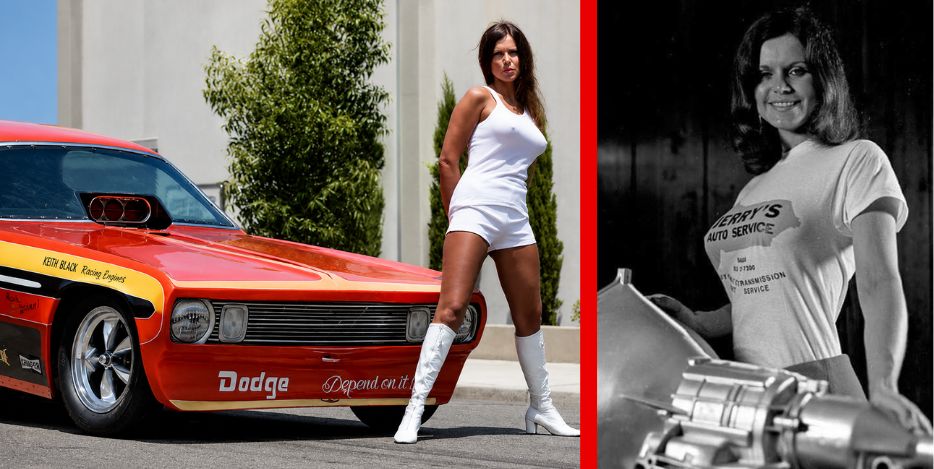
If one venue is most closely associated with Barbara Roufs, it’s Orange County International Raceway (OCIR) in Southern California. OCIR was among the premier drag strips of the 1970s, hosting major events that drew top fuel dragsters, funny cars, and large, enthusiastic crowds. It was here that Roufs built much of her reputation, regularly appearing in the winner’s circle to present trophies to victorious drivers.
She is widely cited as having been named queen of the 6th Annual U.S. Professional Dragster Championship, one of the marquee events held at OCIR. Later in her career, she became associated with the Professional Dragster Association (PDA), reportedly earning recognition as a PDA queen as the decade progressed. These titles weren’t simply ceremonial; they reflected her standing as the face most associated with the sport’s biggest moments at one of its most important tracks.
Beyond OCIR, Roufs is believed to have made appearances at other well-known Southern California strips of the era, including Lions Drag Strip and Riverside Raceway — both legendary venues in their own right during drag racing’s golden age. Her consistent presence across these events helped cement her reputation not as a one-track curiosity, but as a recognizable figure throughout the regional racing circuit.
Her Signature Style and Why It Resonated
Part of what made Barbara Roufs so memorable wasn’t just where she appeared, but how she looked while doing it. Photographs from the era show her in flared pants, halter tops, and the knee-high go-go boots that became something of a personal trademark — a look that perfectly matched the bold, expressive fashion sensibilities of the early 1970s.
Her long, straightened hair and confident posture in front of the camera made her a favorite subject for the photographers who documented the drag racing scene, most notably Tom West. West’s photographs of Roufs — candid shots of her laughing trackside, posed images beside dragsters, and formal trophy-presentation shots — became some of the most enduring visual records of trophy girl culture from that era.
It’s worth emphasizing that Roufs’ appeal wasn’t purely about appearance. Multiple accounts describe her as warm, approachable, and genuinely well-liked by racers and fans alike — qualities that are harder to capture in a photograph but that clearly contributed to why she was remembered so fondly by people who were actually at the track with her, not just those viewing her image decades later online.
Family Life: Marriage and Her Daughter, Jet Dougherty

Despite her public-facing role, Barbara Roufs kept much of her personal life private. She was married, though the full identity of her husband has never been widely documented; what is known is that the couple’s surname, Dougherty, was passed on to their daughter. Roufs had one child, a daughter named Jet Dougherty, reportedly born when Barbara was around 29 years old.
By most accounts, Roufs balanced her trackside career with motherhood, and friends have described her as someone who valued her family deeply despite the glamour associated with her public role. This is a detail worth dwelling on, because it complicates the simpler “trophy girl” narrative that often gets attached to her: Roufs wasn’t just a face at the track on weekends — she was building a private life alongside a very public one, something that wasn’t always easy to do in an industry built around image.
Her daughter Jet has occasionally spoken publicly about her mother, particularly after photographer Tom West began sharing his archive of Roufs’ photographs online in 2016. Jet’s comments, shared in response to the resurfaced images, offered a rare, personal glimpse into how Barbara was remembered by the people who knew her best — not just as an icon of 1970s drag racing aesthetics, but as a mother who would likely have been proud to see her best moments preserved and appreciated by a new audience.
Why Barbara Roufs’ Photos Resurfaced Decades Later
Barbara Roufs largely faded from public visibility as the drag racing trophy girl tradition itself evolved through the late 1970s and into the 1980s. For years, her name and image existed mostly in private photo collections, racing memorabilia, and the memories of those who attended events at tracks like OCIR.
That changed in 2016, when Tom West — the photographer most closely associated with documenting her during her peak years — began uploading his archive of Roufs photographs to social media. The images struck a chord almost immediately. For longtime racing fans, they were a nostalgic time capsule of drag racing’s golden era. For younger audiences encountering Roufs for the first time, the photos offered an entry point into a specific, vivid slice of 1970s American culture: bold fashion, raw horsepower, and an unmistakable sense of freedom.
This resurgence has only grown over time, fueled by vintage car communities, retro fashion accounts, and general internet curiosity about “forgotten” cultural figures from past decades. It’s a pattern that has played out with other figures from niche subcultures of the era — relatively obscure during their active years, then rediscovered and recontextualized once digital archives and social sharing made it possible for images to travel far beyond their original audience.
Barbara Roufs’ Death: What Is Known
Barbara Roufs died in January 1991 at the age of 47. According to multiple accounts, her death was the result of suicide, though the specific circumstances and any underlying reasons have not been made public by her family, who have generally kept this aspect of her story private.
This is, understandably, the part of Barbara Roufs’ story that draws the most curiosity — and also the part where the least verified information exists. Unlike her racing career, which was documented through photographs and event records, the final years of her life were lived largely outside the public eye. By the time of her death, she was reportedly living in Fresno, California, far removed from the racetracks where she had once been a celebrated figure.
It’s important to approach this part of her story with sensitivity rather than sensationalism. Whatever led to her death remains a private matter that her family has chosen not to detail publicly, and respecting that boundary matters more than filling in speculative gaps. What’s clear is that the woman remembered so vividly in 1970s photographs experienced struggles, like many people do, that weren’t visible in the smiling images that made her famous.
Barbara Roufs’ Legacy in Drag Racing Culture
More than three decades after her death, Barbara Roufs occupies a unique place in motorsport nostalgia. She’s frequently mentioned alongside other notable trophy girls of the era, and drag racing historians and casual fans alike continue to reference her as one of the figures who helped define the look and feel of 1970s racing culture at tracks like Orange County International Raceway.
Her legacy is also tied closely to the broader story of women in motorsports during a transitional period. While trophy girls were often viewed through a narrow lens — valued primarily for their appearance — figures like Roufs brought genuine personality, professionalism, and longevity to roles that could easily have been dismissed as purely decorative. Her ability to remain a fixture at major events across multiple years speaks to a level of skill in audience engagement and event presence that went beyond simply showing up and posing for photos.
Today, her image lives on through preserved vintage photographs, fan-run social media tributes, and the ongoing interest of collectors who seek out original prints and racing memorabilia featuring her. For a sport built on speed and machinery, it’s a notable thing that one of its most enduring faces belongs to someone who never sat behind the wheel.
What’s Next: Barbara Roufs’ Continuing Online Presence

As interest in retro and vintage Americana continues to grow across social media platforms, it’s likely that Barbara Roufs will keep finding new audiences. Vintage car shows, drag racing history accounts, and retro fashion communities regularly recirculate images from her era, and each resurgence tends to bring a fresh wave of searches for who she actually was.
There’s also a broader cultural trend at play: a growing appetite for stories about overlooked figures from past decades — people who were well-known within a specific scene but never achieved mainstream celebrity. Barbara Roufs fits that profile closely, and as drag racing’s own history gets more attention from documentary filmmakers, podcasters, and motorsport historians, it’s reasonable to expect her name will continue to surface as part of that larger conversation.
Conclusion
Barbara Roufs’ story is, in many ways, the story of an entire era of American motorsport told through one person. She wasn’t a racer, but she became inseparable from the sport’s identity during one of its most dynamic decades. Her presence at Orange County International Raceway and other Southern California drag strips, her distinctive 1970s style, and her warmth with fans and racers alike turned a supporting role into something people still talk about more than fifty years later.
At the same time, her story is a reminder that public images rarely tell the whole truth about a person’s life. The woman smiling in those vintage photographs was also a mother, a wife, and ultimately someone whose private struggles weren’t visible in the pictures that made her famous. Remembering Barbara Roufs means holding both of those truths together: celebrating the joy and glamour she brought to the racetrack, while respecting the privacy surrounding the harder chapters of her life.
Must Read The Article: Who Is Kyle Snyder Wife? Everything You Need to Know About Maddie Pack
(FAQs)
Who was Barbara Roufs?
Barbara Roufs was an American drag racing trophy girl and promotional model who became a well-known figure on the Southern California drag racing circuit during the late 1960s and 1970s, particularly at Orange County International Raceway.
What was Barbara Roufs famous for?
She was best known for presenting trophies to winning drivers at major drag racing events and for her distinctive 1970s style, including her go-go boots and flowing hair, which made her one of the most photographed trophy girls of her era.
Did Barbara Roufs have children?
Yes. She had one daughter, Jet Dougherty, who has occasionally spoken publicly about her mother, particularly after photographer Tom West shared his archive of vintage photos online in 2016.
How did Barbara Roufs die?
Barbara Roufs died in January 1991 at the age of 47. Reports indicate her death was the result of suicide, though her family has not publicly disclosed further details, and that privacy should be respected.
Why are Barbara Roufs’ photos popular again?
Interest in Roufs was reignited in 2016 when photographer Tom West began sharing his archive of images from her drag racing days on social media, introducing her to new audiences interested in vintage motorsport and retro fashion culture.
Where did Barbara Roufs work as a trophy girl?
She was most closely associated with Orange County International Raceway, though she is also believed to have appeared at other prominent Southern California tracks, including Lions Drag Strip and Riverside Raceway.
Is there an official Barbara Roufs biography or Wikipedia page?
verified, comprehensive official biography of Barbara Roufs. Most available information comes from vintage photo archives, racing fan communities, and secondhand accounts rather than contemporaneous news coverage, so some commonly cited personal details should be treated as unverified.
Related Topics: